
Answering Your Common Questions About Consumer Unit Replacement
Expert answers to common questions about consumer unit replacement. Learn why your fuse box needs an upgrade, the cost, the process, and essential electrical safety tips from Dan Electrician, a trusted Liverpool electrician.
Introduction: The Heartbeat of Your Home's Electricity
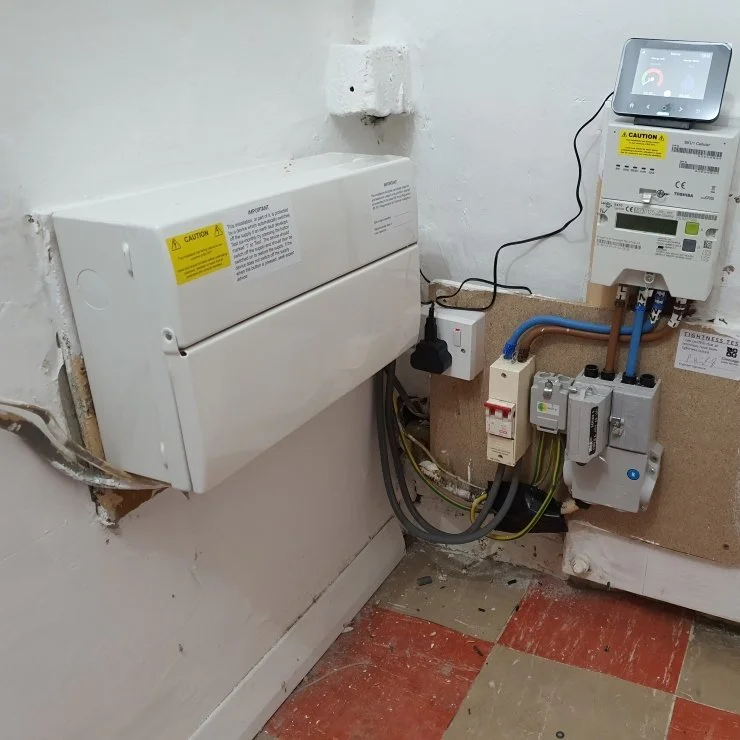
When was the last time you thought about the metal box on your wall that controls all the electricity in your home? For most, it’s a case of "out of sight, out of mind" – until a strange flickering light or a tripping breaker forces you to confront it. That box is your consumer unit (often called a fuse box or distribution board), and it is, quite literally, the heartbeat of your home's electrical system.
If you're a homeowner in Liverpool or the surrounding areas, chances are you've heard the phrase "consumer unit replacement" and perhaps have a few nagging electrical questions about what it entails, why it’s necessary, and how much it costs.
At Dan Electrician, we specialise in providing safe, reliable, and compliant electrical upgrades. We understand that diving into home electrics can be intimidating. That’s why we’ve compiled this detailed electrician FAQ to demystify the process, address your most pressing electrical questions, and ensure your home's safety is up to modern standards.
❓ What Exactly Is a Consumer Unit, and Why Might It Need Replacing?
A consumer unit is the main control panel for the electrical wiring in a building. It takes the main electricity supply and divides it into separate circuits, each protected by a fuse, circuit breaker, or RCD (Residual Current Device).
The Replacement Necessity: Old vs. New
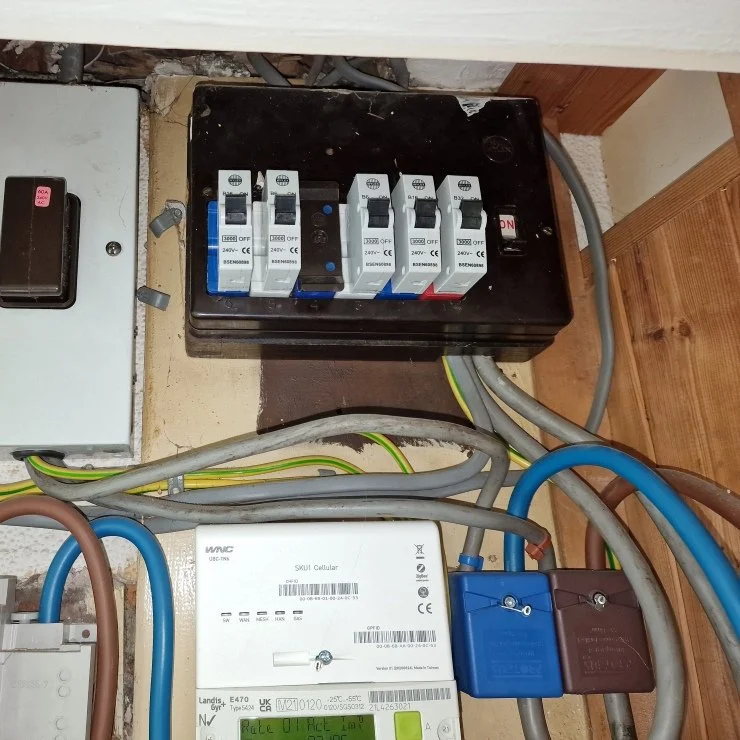
Older Units (Fuse Boxes): If your home still has an old-style fuse box with rewirable fuses, it’s a major indicator that you need a consumer unit replacement. These older units offer very basic protection and are non-compliant with current electrical safety standards (BS 7671).
The Main Reason for a Replacement: Safety.
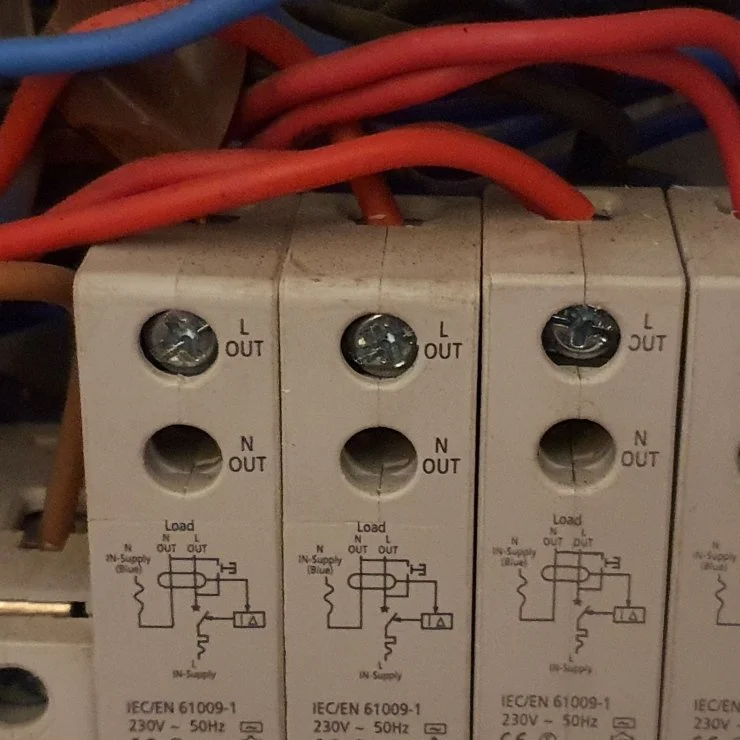
RCD Protection: Modern consumer units are fitted with RCDs and RCBOs (Residual Current Breaker with Overcurrent protection). These devices can detect a minor earth leak (often caused by touching a live wire or a fault in an appliance) and trip the power in milliseconds, preventing severe electric shock and saving lives.
Fire Safety: Since 2016, all new or replacement consumer units must have an enclosure made of non-combustible material (e.g., metal) to contain any fire that may start inside the unit due to a fault. This dramatically reduces the risk of the fire spreading.
Capacity: Older units may not be able to handle the load of modern appliances (induction hobs, EV chargers, power showers), leading to nuisance tripping or overheating.
🛠️ The Replacement Process: What to Expect
The thought of an electrician messing with your home's main power supply can be daunting. Here is a step-by-step breakdown of the typical consumer unit replacement process, giving you confidence in the work being done by your Liverpool electrician.
1. Initial Assessment and Quotation
Your Dan Electrician will first perform a visual inspection of your existing unit and some circuit testing. We'll ask about your electrical usage (e.g., do you plan on installing an electric shower or an EV charger?) to ensure the new unit is future-proofed. This allows us to provide an accurate, fixed-price quote with no hidden costs.
2. Isolation and Removal
On the day of the work, the power supply will be completely isolated and locked off at the meter. The old unit is safely disconnected and removed.
3. Installation of the New Consumer Unit
The new modern consumer unit (usually a metal unit for compliance) is mounted, and the existing wiring for each circuit is tidied up, terminated, and clearly labelled on the new breakers.
4. Testing and Commissioning
This is the most crucial step. A qualified electrician must perform a rigorous set of tests to ensure every circuit is safe and functioning correctly according to BS 7671 regulations. This includes:
Continuity of Protective Conductors: Checking the earthing connections.
Insulation Resistance: Ensuring the wiring insulation is not damaged.
Polarity: Checking that wires are connected correctly.
RCD Trip Time: Crucially, ensuring the RCDs trip fast enough to protect against electric shock.
5. Certification and Paperwork
Once testing is complete, the circuit breakers are switched on, and power is restored. Your Dan Electrician will issue you with an Electrical Installation Certificate (EIC), which is essential for home insurance and when selling your property. We will also notify your local authority (e.g., Liverpool City Council) under Part P of the Building Regulations.
💰 Cost and Disruption: Practical Electrical Questions
Q: How much does a consumer unit replacement cost?
A: The cost of a consumer unit replacement can vary widely based on several factors, including:
Size: The number of circuits (e.g., a 10-way vs. a 16-way board).
Type of Property: The complexity of the existing wiring (e.g., an old terraced house in Liverpool might be more complex than a new build).
Incoming Supply: Whether any earthing or bonding upgrades are needed to meet current standards.
Actionable Tip: Always get a detailed, fixed quote from a reputable NICEIC-approved electrician like Dan Electrician. Do not choose a provider based on price alone; safety and compliance are paramount.
Q: How long will the power be off during the replacement?
A: For a standard replacement in a typical domestic setting, the power is usually off for 4 to 8 hours. We aim to have the job completed within a single working day. We will always communicate the exact timeframe to minimize disruption.
Q: Do I need to redecorate after the unit is replaced?
A: In most cases, no. The new unit will typically fit neatly into the space of the old one. We take great care to ensure a tidy installation, often with minimal, if any, damage to the surrounding plaster or paintwork.
🛑 Safety and Compliance: Your Most Important Electrician FAQ
Q: What is an RCD, and why are they so important?
A: An RCD (Residual Current Device) is a life-saving device that detects earth current faults—the kind that can occur if you accidentally cut a cable or an appliance malfunctions. It trips the circuit almost instantly.
Personal Anecdote: We recently worked on an older property in Liverpool where the client’s existing unit had no RCD protection. During the testing of the new unit, the RCD tripped immediately on one circuit, revealing a hidden, potentially lethal fault in a garden socket. A modern consumer unit saved them from a serious accident.
Q: Does a consumer unit upgrade cover the rest of my home's wiring?
A: No. A consumer unit replacement only addresses the control panel itself and the protection it provides. It does not replace the wiring within your walls. If your wiring is very old (e.g., rubber or lead-sheathed cables), we highly recommend a full Electrical Installation Condition Report (EICR) to assess the condition of the entire system.
Q: Are Dan Electrician services certified and insured?
A: Absolutely. As a leading Liverpool electrician service, Dan Electrician is fully qualified, insured, and registered with a competent person scheme (e.g., NICEIC or NAPIT). This certification is your guarantee that all work is compliant with the latest IET Wiring Regulations (BS 7671).
Conclusion: Don't Compromise on Electrical Safety
Your home is your sanctuary, and its electrical system should be the last thing you have to worry about. A modern consumer unit replacement is not just an upgrade; it's an investment in the safety and peace of mind of your family and property.
By addressing these common electrical questions and choosing a certified professional like Dan Electrician, you ensure that your home meets the highest standards of safety and compliance. Don't wait for a dangerous fault to force your hand.
Ready to secure your home with a modern, safe consumer unit?
Contact the trusted Liverpool electrician team at Dan Electrician today for a free, no-obligation assessment and quote.
Would you like to schedule an EICR to assess the current condition of your home's wiring?