

Consumer Unit Replacement in Liverpool & Birkenhead
Upgrade an old fuse box with a modern consumer unit, professionally installed, tested and certified. Dan Electrician provides consumer unit replacements across Liverpool, Birkenhead and the Wirral.
NICEIC Registered · Fully Insured
30+ Years’ Experience
Tested & Certified
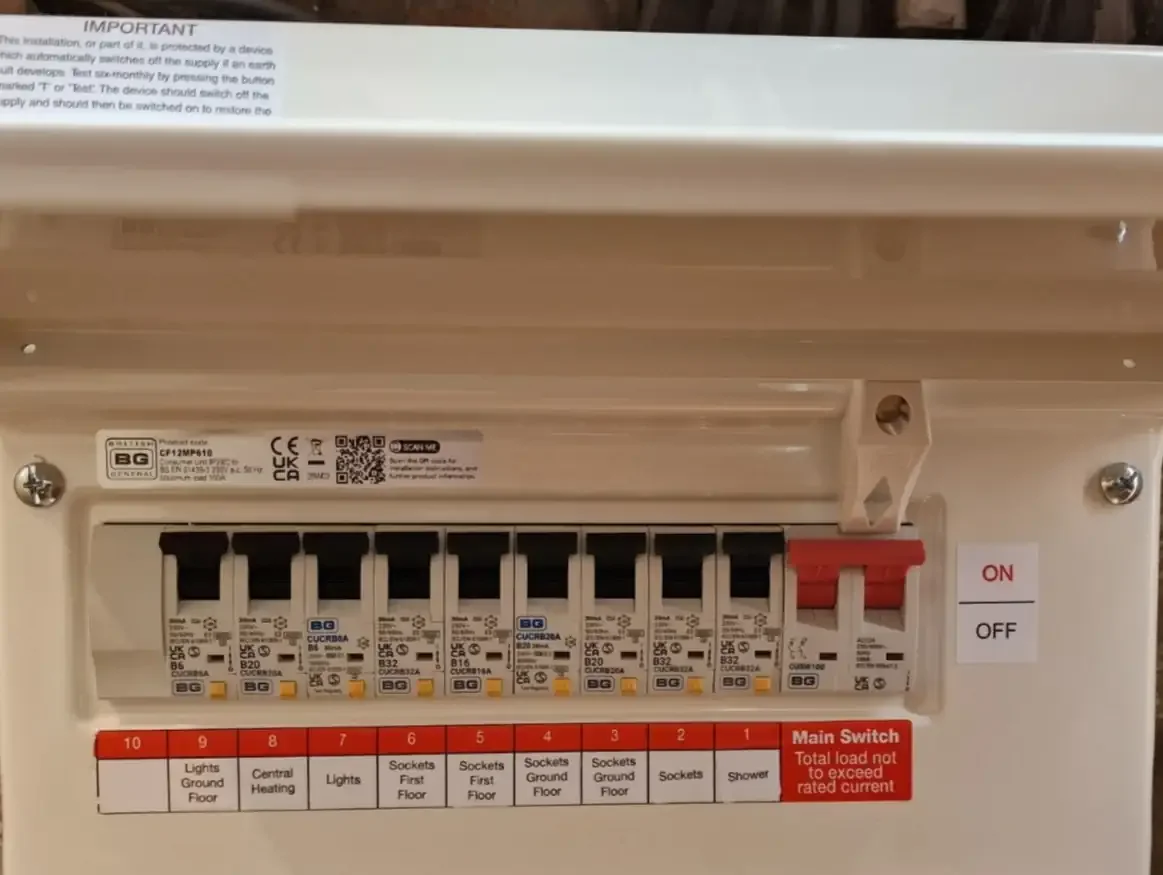
Is It Time to Replace Your Fuse Box?
An older fuse box doesn’t automatically mean your electrics are unsafe, but it can be a sign that the installation was designed long before today’s electrical demands and safety protection became standard. We still come across plenty of older fuse boxes around Liverpool, Birkenhead and the Wirral — including rewireable fuse boards, older plastic consumer units and installations with limited RCD protection. The important thing is not simply how old the box looks, but whether the installation is safe, suitable and providing the protection your home now needs.
Signs Your Consumer Unit May Need Attention
Rewireable fuses instead of modern circuit breakers
Little or no RCD protection
Frequent tripping or unexplained electrical faults
Signs of heat, burning or damage around the fuse box
Older plastic consumer unit with ageing components
Major alterations, extensions or increased electrical demand planned
A consumer unit should not be replaced simply because it is old. Before recommending an upgrade, the existing installation should be assessed and tested so any underlying faults, earthing issues or circuit problems are identified first.
What Protection Does a Modern Consumer Unit Provide?
A modern consumer unit does much more than simply switch circuits on and off. Depending on the installation, it can provide individual RCBO or RCD protection against earth faults and electric shock, surge protection to help protect electrical equipment from voltage spikes, and AFDD protection where appropriate. The exact arrangement should be selected to suit the property, the circuits being supplied and the results of the electrical inspection — not simply fitted as a one-size-fits-all package.
RCBO & RCD Protection
RCDs and RCBOs are designed to disconnect the supply when certain electrical faults are detected. An RCBO combines residual-current protection with overload and short-circuit protection for an individual circuit, helping to limit disruption because a fault on one circuit does not necessarily switch off several others.
Surge Protection (SPD)
Surge Protection Devices help protect the electrical installation and connected equipment from transient overvoltages caused by events such as lightning activity or electrical switching. SPDs are commonly incorporated into modern consumer units and should be selected and installed to suit the installation and manufacturer’s requirements.
AFDD Protection
AFDDs are designed to detect certain dangerous electrical arcing conditions that conventional circuit breakers and RCDs may not detect. They can provide an additional layer of protection against electrical fires, particularly where the risk assessment or type of property makes their use appropriate.
The right combination of protection depends on the property and the circuits being installed, which is why the consumer unit should be designed around the installation rather than chosen from a standard package.
What Happens During a Consumer Unit Replacement?
Replacing a consumer unit is more than simply removing the old fuse box and fitting a new one. The existing installation needs to be checked, the circuits identified and tested, and any issues that could affect the safety of the new consumer unit dealt with before the work is completed.
1. Initial Inspection & Testing
Before the old consumer unit is removed, the existing electrical installation is assessed and tested. This helps identify faults, earthing or bonding issues, damaged circuits or other problems that may need attention before the new unit is connected.
2. Safe Isolation & Removal of the Old Unit
The electrical supply is safely isolated before the existing fuse box or consumer unit is disconnected and removed. Circuits are identified and prepared so they can be connected correctly to the new unit.
3. Installation of the New Consumer Unit
The new consumer unit is installed with the protection appropriate for the property and its circuits. Depending on the installation, this may include RCBO or RCD protection, surge protection and AFDDs where required or appropriate.
4. Circuit Testing & Verification
Once the new consumer unit is connected, the electrical installation is tested to confirm that protective devices operate correctly and that the circuits meet the required safety parameters. Any problems found during testing are discussed before additional remedial work is carried out.
5. Certification & Handover
After satisfactory testing, the relevant electrical certification is completed and the new consumer unit is labelled clearly. We’ll also explain the main protective devices, how to reset a circuit if it trips and what to do if a fault occurs in the future.
No surprises halfway through the job. If testing uncovers an existing fault or additional work is required, we’ll explain what we’ve found and discuss the options before carrying out extra work
How Much Does a Consumer Unit Replacement Cost?
What Can Affect the Price?
Pricing depends on the size of the installation, the number of circuits, the protective devices required and whether testing identifies any existing faults that need attention. Properties with a special or higher-demand supply — such as multiple occupation (HMO) or commercial premises — can cost significantly more than the ranges above, since these installations often involve additional circuits, higher-capacity distribution boards or additional compliance requirements.
Rather than pricing every property as though it were identical, we assess the existing installation first and provide a free estimate on every enquiry, so you know the actual cost for your property before any work is agreed.
You'll know the agreed price before the replacement begins. If testing reveals an existing problem that wasn't visible beforehand, we'll explain it and agree any additional work with you first.
Consumer unit replacements typically start from £350 for a small consumer unit, such as a garage or EV charger supply, up to around £1,500 for a three-phase installation.
You’ll know the agreed price before the replacement begins. If testing reveals an existing problem that wasn’t visible beforehand, we’ll explain it and agree any additional work with you first.
Consumer Unit Replacement, Testing & Certification
A consumer unit replacement isn’t complete when the new board is simply switched on. The installation must be inspected and tested so the new protective devices, circuits, earthing and other safety measures can be verified before the work is handed back to you.
Electrical Testing
The relevant circuits are tested before and after the replacement. This helps identify existing faults and confirms that the completed installation meets the required safety parameters and that the protective devices operate correctly.
Electrical Installation Certificate
After a satisfactory consumer unit replacement, an Electrical Installation Certificate (EIC) is issued for the work. This records the installation details, inspection and test results and confirms the new work has been verified in accordance with BS 7671. NICEIC specifically identifies consumer unit replacement as work covered by an Electrical Installation Certificate.
Part P Building Regulations
In England, replacing a consumer unit in a home is notifiable electrical work under Part P of the Building Regulations. Where the work is self-certified through an appropriate Competent Person Scheme, the work is notified and a Building Regulations compliance certificate is provided separately from the electrical certificate.
Installed to Current Wiring Regulations
Consumer unit replacements are designed, installed and tested to the current requirements of BS 7671, the IET Wiring Regulations. The current publication is BS 7671:2018+A4:2026.
What you receive:
✓ Tested consumer unit and circuits
✓ Electrical Installation Certificate
✓ Clearly labelled consumer unit
✓ Building Regulations notification/certificate where applicable
✓ Explanation of the new protective devices
Consumer Unit Replacement Across Liverpool, Birkenhead & the Wirral
Dan Electrician is based in Birkenhead and carries out consumer unit replacements for homeowners, landlords and businesses across both sides of the Mersey. We regularly work throughout Liverpool, Birkenhead and the wider Wirral, from older properties with rewireable fuse boxes to modern homes that need additional circuit protection for today’s electrical demands.
Liverpool & North Liverpool
We provide consumer unit upgrades across Liverpool, including areas such as Bootle, Aintree, Crosby and Formby. Whether the job is part of a renovation, an electrical safety upgrade or the replacement of an ageing fuse box, the existing installation is assessed and tested before the new consumer unit is specified.
Birkenhead & the Wirral
From our Birkenhead base, we also cover Wallasey, Bebington, Prenton, Upton, Greasby, Heswall, West Kirby, Hoylake and Bromborough. Consumer unit replacements range from straightforward domestic upgrades to installations where existing faults, earthing or older wiring need to be dealt with first.
Not sure whether we cover your area? Give Dan a call — nearby locations across Merseyside are usually no problem.
For local area information, visit:
-
Description The time required depends on the number of circuits, the condition of the existing installation and whether testing uncovers faults that need attention. We’ll give you an expected timescale before the work starts and explain any additional issues if they arise during testing
-
Yes. The electrical supply needs to be safely isolated while the old consumer unit is removed and the new one is installed. We’ll keep the interruption to a practical minimum and let you know what to expect before starting work.
-
Not necessarily. A plastic consumer unit is not automatically unsafe simply because it was installed before current non-combustible enclosure requirements. The condition of the unit, its location, protective devices and the wider electrical installation all need to be considered before recommending replacement. The IET also confirms that older installations are not automatically unsafe simply because newer editions of BS 7671 have introduced higher standards
-
Following satisfactory testing, you should receive an Electrical Installation Certificate for the replacement work. NICEIC specifically identifies consumer unit replacement as work covered by an Electrical Installation Certificate.
-
Not automatically. An EICR is a report on the condition of an existing electrical installation, whereas a consumer unit replacement itself is certified using an Electrical Installation Certificate. The existing installation still needs appropriate inspection and testing so faults or unsuitable circuits can be identified before the new consumer unit is connected.
Still unsure whether your fuse box needs replacing?
If you’re concerned about an older consumer unit, frequent tripping or limited electrical protection, get in touch and we can assess the installation before recommending any work.
Helpful Guides About Consumer Units & Fuse Boxes
Not every fuse box problem means you need a replacement. These guides explain the different types of protection, common warning signs and what to look for before deciding whether an upgrade is necessary.
RCD vs RCBO: What’s the Difference?
RCDs and RCBOs both provide residual-current protection, but they work differently within a consumer unit. Our guide explains the difference and why individual RCBO protection is commonly used in modern installations.
READ: RCD VS RCBO
Fuse Box vs Consumer Unit
Still calling it a fuse box? You’re not alone. This guide explains the difference between older fuse boards and modern consumer units, including the types of protection you may find inside each one.
Why Does My RCD Keep Tripping?
Frequent RCD tripping can be caused by an appliance fault, damaged wiring, moisture, cumulative leakage or another electrical problem. Find out what repeated tripping can mean and when professional fault finding is needed.
Signs Your Fuse Box Is Dangerous
Burning smells, heat damage, buzzing, exposed parts or obvious deterioration should never be ignored. This guide explains the warning signs that deserve proper investigation.
Plastic Consumer Units - Are They Safe?
An older plastic consumer unit does not automatically need replacing. Learn what actually matters when assessing its condition, protection and suitability for continued use.
READ: PLASTIC CONSUMER UNITS
Consumer Unit Replacement Cost
Want a clearer idea of what affects the price? Our cost guide explains how circuit numbers, protective devices, testing and existing faults can influence the final quotation.
Need a Consumer Unit Replacement in Liverpool or Birkenhead?
If your fuse box is showing signs of age, you’re experiencing electrical faults or you simply want to know whether an upgrade is worthwhile, speak to Dan Electrician. We’ll assess the installation first and explain what is actually required before recommending any work.
NICEIC Registered · Fully Insured
30+ Years’ Experience · Tested & Certified
Serving Liverpool, Birkenhead & the Wirral