Fire Alarms 2026: The Ultimate Guide to Safety, Regulations, and Smart Protection
It’s 3:00 AM. Your family is fast asleep. In the corner of the kitchen, a neglected toaster or a faulty lithium-ion battery begins to smoulder. Within minutes, the room is filled with thick, black smoke. In this moment, the most important piece of technology in your entire home isn’t your smartphone or your EV charger—it’s that small plastic disc on your ceiling.
But here is the question: When was the last time you actually checked if it works?
At Dan Electrician, based right here in Birkenhead (CH41), we’ve seen how fire safety has evolved. With the arrival of the BS 7671 Amendment 4 and the latest 2026 fire safety updates, the old "fit and forget" mentality is officially dead. Whether you’re a homeowner in Oxton, a landlord in Liverpool, or a business owner in the Wirral, this guide will walk you through everything you need to know about fire alarms in 2026.
1. Why Fire Alarms Are No Longer "Optional"
In 2026, a fire alarm is more than a recommendation—it is a legal and insurance necessity. Beyond the obvious goal of saving lives, modern fire alarms serve three critical functions:
Early Detection: Modern sensors can detect a fire up to 10 minutes faster than older models.
Insurance Compliance: Many UK insurers now require proof of a "Satisfactory" EICR and working alarms to pay out on fire damage claims.
Legal Protection: For landlords, failing to provide working alarms can result in fines of up to £5,000 per breach.
2. Understanding the 2026 Regulations (BS 5839-6)
Fire safety isn't just about having an alarm; it’s about having the right alarm in the right place. The UK follows the BS 5839-6 standard, which categorises systems into "Grades" and "Categories."
The Grades (Quality of Equipment)
Grade D1/D2: These are the most common for domestic homes. They are mains-powered with a battery backup.
Grade A: High-end systems with a central control panel, typically required for large HMOs (Houses in Multiple Occupation) or commercial buildings.
The Categories (Level of Protection)
LD3: Protection for escape routes only (hallways and landings).
LD2 (The 2026 Gold Standard): Protection for escape routes plus high-risk rooms like the kitchen and living room.
LD1: Alarms in every room except the bathroom (Maximum protection).
Dan’s Anecdote: I recently visited a property in Prenton where the owner only had one battery alarm in the hallway. We found a fault in the kitchen that could have easily gone unnoticed. Upgrading them to an LD2 system literally saved their home three weeks later when a dishwasher fault occurred.
3. The 2026 Tech Revolution: Multisensors & Smart Alarms
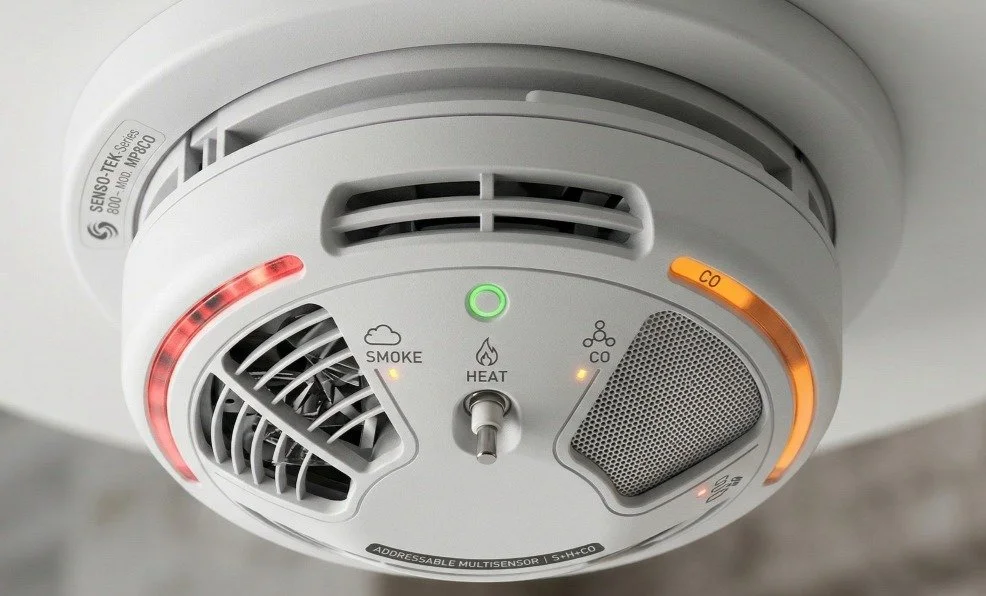
smart sensor
As of the BS 5839-1:2025 update, we are seeing a massive shift toward Multisensor Detectors.
Unlike traditional alarms that only look for smoke (which can lead to annoying false alarms from burnt toast), multisensors monitor both heat and optical smoke patterns. This makes them smarter, faster, and much less likely to "cry wolf."
Smart Integration
In 2026, your fire alarm should talk to your phone. If you’re at work in Liverpool City Centre and your alarm triggers in Birkenhead, you’ll receive an instant notification. This allows you to call the emergency services before the fire spreads, potentially saving your property from total loss.
4. Installation: Where Should They Go?
Placement is everything. If an alarm is placed incorrectly, it might as well not be there.
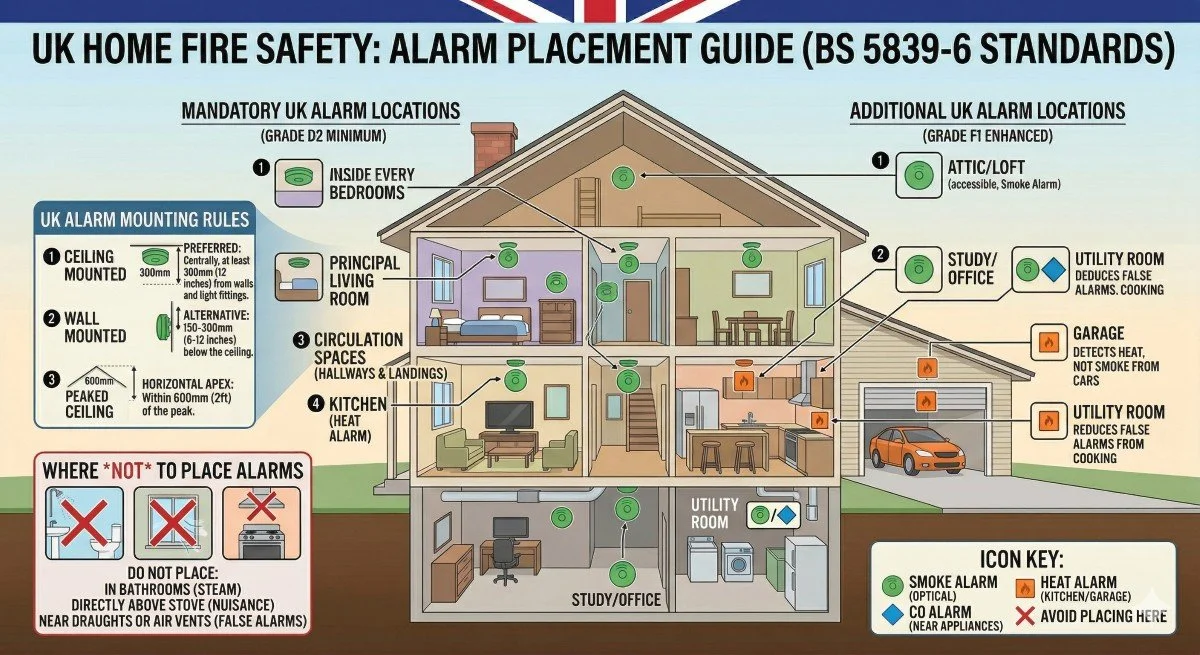
placement guide
Kitchens: Always use a Heat Alarm. Smoke alarms will trigger every time you cook.
Hallways & Landings: Use Optical Smoke Alarms.
Bedrooms: Use Multisensor Alarms for the best protection while sleeping.
Living Rooms: Often overlooked, but with more electronics (and chargers) in lounges, a smoke alarm here is now highly recommended.
5. Landlord Responsibilities: Stay Legal, Stay Safe
If you rent out property in the Wirral or Liverpool, the Smoke and Carbon Monoxide Alarm (England) Regulations are strict. You MUST:
Have a smoke alarm on every floor where a room is used as living accommodation.
Have a Carbon Monoxide (CO) alarm in any room with a fixed combustion appliance (excluding gas cookers).
Ensure all alarms are tested and working on the day a new tenancy begins.
6. Maintenance: The 2026 Checklist
A fire alarm is only as good as its last test. Follow this simple routine:
Weekly: Press the test button.
Monthly: Use a vacuum or soft brush to clear dust from the sensors.
Annually: Change the batteries (if not using 10-year sealed units).
Every 10 Years: Replace the entire unit. Alarms have an expiry date!
Summary: Your Safety is Our Priority
Fire safety doesn't have to be complicated, but it does have to be correct. Between the new Amendment 4 wiring regulations and the latest multisensor technology, your home has the potential to be safer than ever before.
At Dan Electrician, we don’t just install alarms; we design safety systems that protect your family and your investment. From our base on Corfu St in Birkenhead, we’re proud to serve the entire CH41 area and beyond.
Is Your Home Compliant?
Don't wait for the "chirp" to tell you something is wrong. Get a professional assessment today.
Call us: 07400238767
Visit:liverpoolelectrician.uk
Help us spread the word! Share this post with a friend or neighbour in the Wirral to help keep our community fire-safe.