Kitchen Renovations Electrical Plan Before You Buy Your New Appliances
Imagine this: You’ve just spent weeks scrolling through Pinterest, you’ve finally picked out that sleek induction hob and double-integrated oven, and your dream kitchen cabinets are on order. But when the delivery truck arrives, your electrician delivers some bad news—your current wiring can’t handle the load, and the layout doesn't meet safety regulations.
In the excitement of choosing finishes and faucets, the kitchen electrical wiring is often an afterthought. However, failing to plan your electrics before you buy your appliances can lead to costly delays, ruined cabinetry, and even legal headaches.
In this guide, we’ll explain why an electrical plan is the foundation of any successful kitchen renovation and why "Notifiable Work" means you need a professional NICEIC electrician in Liverpool rather than a general handyman.
1. The "Power Gap": Why Modern Appliances Demand More
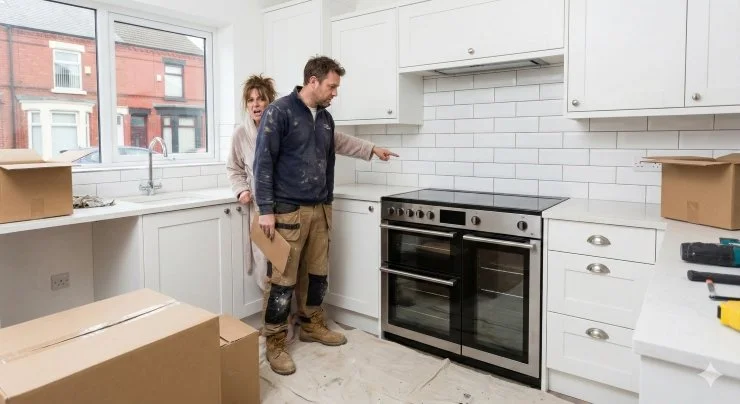
Twenty years ago, a kitchen might have had a fridge, a basic oven, and a toaster. Today, we have boiling water taps, wine coolers, air fryers, and high-performance induction hobs.
Many homeowners make the mistake of assuming a new appliance can simply "plug in" where the old one was. Here is why that is rarely the case:
Induction Hobs: These require a dedicated high-power circuit. If you’re switching from gas to electric, you likely don't have the heavy-duty cabling required.
Integrated Appliances: The position of your sockets matters. If a socket is directly behind a dishwasher, the unit won't sit flush against the wall.
Circuit Overload: Adding extra sockets for the kitchen to accommodate coffee machines and blenders can overload older "ring mains," leading to tripped breakers or, in worst cases, fire hazards.
2. Understanding "Notifiable Work" and Building Regs
One of the biggest misconceptions in home DIY is that anyone can "run a few wires." In the UK, kitchen electrics fall under Part P of the Building Regulations.
Because kitchens are considered "special locations" (due to the proximity of water and electricity), most electrical work here is Notifiable.
What counts as Notifiable Work?
Installing a new circuit (e.g., for a new electric range).
Replacing a consumer unit (fuse box).
Alterations to existing circuits in "high-risk" areas.
Why does this matter? When you sell your home, the buyer’s solicitor will ask for a Building Regulations Compliance Certificate. If you had a handyman "do a bit of wiring" without a certificate, you may have to pay for a full rewire or an indemnity policy to close the sale.
Expert Tip: Hiring an NICEIC electrician in Liverpool ensures that your work is self-certified. We handle the paperwork and notify the local authority for you, giving you peace of mind and a valid certificate for your records.
3. The Anatomy of a Kitchen Electrical Plan

Before you click "buy" on that appliance package, sit down with your kitchen designer or electrician to map out the following:
The "Zone" Strategy
Regulations dictate exactly where sockets can be placed in relation to sinks (usually at least 300mm away horizontally) and cookers. A professional plan ensures you have enough extra sockets for your kitchen islands and worktops without violating safety codes.
Dedicated Circuits
High-draw appliances shouldn't share a circuit. Your plan should specify dedicated lines for:
The Oven/Hob
The Dishwasher/Washing Machine
The Fridge-Freezer (to prevent food spoilage if a different appliance trips the circuit)
Lighting Layers
Don't just settle for a single central light. Consider:
Task Lighting: LED strips under cabinets to see what you’re chopping.
Ambient Lighting: Dimmable ceiling spots.
Feature Lighting: Pendant lights over a breakfast bar.
4. Common Mistakes to Avoid
Mistake;
Buying appliances first, they may not fit your power capacity. Get an electrical survey before purchasing.
Hiring a "multi-trade" handyman with no Part P certification for the work. Always use a registered NICEIC electrician
5. Why Local Expertise Matters (Liverpool Focus)
If you live in a classic Liverpool terrace or a Victorian villa in Sefton Park, your home’s original wiring was never designed for the 21st century. These properties often require a "consumer unit upgrade" before a modern kitchen can be safely installed.
As a local NICEIC electrician in Liverpool, Dan Electrician understands the specific challenges of the region's housing stock. We don't just "fix wires"; we ensure your home improvement project adds real value and meets every safety standard.
Conclusion: Plan First, Shop Second
A beautiful kitchen is useless if it isn't functional—or worse, if it's unsafe. By creating a comprehensive electrical plan before buying your appliances, you save money, avoid project delays, and ensure your home remains compliant with UK law.
Don't leave your dream kitchen to chance. Ensure your kitchen electrical wiring is handled by the experts.
Ready to start your kitchen transformation the right way? Contact Dan Electrician today for a consultation on your kitchen wiring and ensure your project is fully certified and safe.